Pages

Showing posts with label traditions. Show all posts

A Tradition from Romania


There are a treasure trove of rituals and traditions that originate from Romaniaand people from different regions practice these in varied forms. The important ceremonial rituals practiced as part of a wedding is heavily dependant upon which region the couple come from.
One ritual/tradition that we came across takes place in the hours leading up to the wedding when the bride is preparing for the day. While she is dressing, the bridesmaids and best friends all gather and assist her.  This is a very important part of the preparation and can be a very emotional and moving moment for the bride and those closest to her.

Song of the Bride:

Say goodbye bride to your mother, to your father

To your sisters, to your brothers, to your garden with flowers

To your friends and neighbours, to the games or lover

Cry bride, today is the day

It's time to forget your father and love your husband

To forget your mother and to love your mother- in- law

To forget about your sisters and to love your sisters-in-law
 
You will go with your husband and you will leave behind everything you had.
 
As they prepare her for her ceremony a song, "Say farewell bride to your family and house"- "Ia-ti mireasa ziua buna" is played and with an overflow of emotion, is often accompanied by tears and embraces  from all present. We found a rough translation of the lyrics:
Today with many couples living together before they are married, much of this significance can be lost, but for those who are coming from their parents home to join their husband in a new home and a new life, this rite of passage is still very special.

Placement of the Wedding Ring


Welcome to week 27 of 52 Wedding Tradition/Rituals in 52 Weeks, 

Have you ever asked yourself why the wedding ring is placed on the third finger of the left hand?

We recently pondered the same question and in response we decided to go in search of where this idea may have originated. As you can imagine there were many interpretations and we have outlined our favourite 3 for you.

In Western Culture it was thought to originate from the Greek physicians in the third century B.C where they were misled to believe that a vein of blood ran from the third finger of the left hand straight to the heart. A slightly misguided interpretation of the human anatomy yes, but you can understand their logic of placing the ring that symbolises love and commitment on the part of the body that was thought to be in direct connection to the heart. In fact this vein was later named ‘vena amori’ or vein of love.

The Chinese have a beautiful interpretation and we have outlined this below showing the representation of each finger :

Thumb represents your parents
Index finger represents your siblings
Middle finger represents your self
Ring finger represents your life partner
Little finger represents children

Now this idea is not based solely on just guessing what each finger may represent, there is actually a really sweet theory behind it.

Basically, if you place your palms together in front of you and bend your middle fingers down so that they are knuckle to knuckle (see pic) the significance becomes clear.


Your thumbs (which represent your parents) are easily separated as you are separated from them as you move off to marry.

Your index finger (which represents your siblings) is also easily separated signifying how you will separate from them in your life, creating your own families.

Your middle finger - is removed as it represents yourself.

Your little finger (representing your future children) is easily parted also representing that they too are not with you forever.

If you try however to separate your ring fingers (representing your life partner) You cannot. Why? because you are tied together as one for eternity. The sentiment behind this theory is beautiful in that the inability to separate these two fingers is exactly where the rings should be placed reminding us of this everlasting unbreakable bond.

A final theory (culture unknown) puts forward the idea that the third finger cannot be held out alone, it needs the support of both the middle and little fingers on either side . So what does this signify, well it gives the ring finger union, support and protection thus representing a happy and health marriage and life together..

The Wedding Gurus xx

Week 19: Blackening of the Bride

Welcome to week 19 of our "52 traditions/rituals in 52 weeks".

Yes it is pretty much exactly what it sounds like – blackening of the bride. In this Scottish ritual/tradition the poor bride is subjected to being covered in some disgusting concoctions and substances all in the name of easing her worries. Luckily for the poor bride this takes place in the days leading up to the wedding and never on the day or even the day before.

The most common way of ‘blackening’ the bride is for her friends (debatable) to take her out into the streets and smother her in every awful substance they can find, usually including things like fish guts and molasses, spoiled milk and rotten eggs and occasionally topped off with flour, feathers or anything else that may help her to look ridiculous and smell terrible.


Believe it or not, it is thought that being subjected to this ultimate humiliation will mean that any problems or humiliations the couple may see in the future and within the marriage will seem so much less worrisome or and have little meaning in comparison.
Sadly that is not the end to the ordeal – Completely covered from head to toe in the foul mix and smelling worse than you can imagine, the poor thing is then paraded through the streets, on show for all to see. Her ‘friends’ who walk ahead of her bang pots and pans to ensure the attention of the crowd and then usually lead her to a local pub or club for a celebration of her coming marriage.
Although probably pretty awful and stinky, all in all this would probably be a pretty fun ritual/tradition (or a slightly less foul version of) to do with a group of girlfriends. The photos and the laughs would definitely last a lifetime.
The Wedding Gurus
xxx

Week 18 - Something Old, Something New, Something Borrowed & Something Blue

Welcome to week 18 of our "52 traditions/rituals in 52 weeks."

One of the most common and recognised wedding traditions has to be “Something Old, Something New, Something Borrowed, Something Blue” – and if you are going all the way then “And a Sliver Sixpence in her Shoe.”

Of the many thousands of traditions that have come and gone over the centuries, this old English rhyme from the Victorian era is one that has truly stood the test of time and for some reason is still the most popular of all rituals/traditions in our modern society.


"Something Old" is said to symbolise the special connection that the bride has with her own family and that she will maintain to them and to her origins and her past. ‘Something Old – usually gives rise for the bride to choose something that is meaningful from the family, perhaps an heirloom or a piece of her grandmother (or other family members) jewellery. Another option, far more popular in the past than in recent times, is the wearing of a wedding gown belonging to her mother or grandmother.

"Something New" signifies that if the bride has something new then  good fortune and success will be in abundance as she begins her new life with her husband. ‘Something new’ can be anything of her choosing, but if she is not wearing an old dress then her new wedding dress is often a good choice.

"Something Borrowed" is a reminder to the bride of her strong friendships and family bond. The borrowing of an item will give her a sense that she will have love and support whenever she may need it and always have others to lean on when times are tough. The borrowed item can be anything of her choosing, but is most often something that is easily concealed, worn or able to fit in a small purse.


"Something Blue" Is a symbol of love, faithfulness, modesty, fidelity and loyalty. In ancient Roman times the colour blue was the colour that represented all of these (Evidenced by the Virgin Mary in blue). Brides often wore blue wedding gowns in those times and a today still honour this by wearing a blue garter.

 "A Silver Sixpence in her Shoe" A sixpence is an old British coin, which was said to bring the good wishes of loved ones to the bride for financial security and happiness if worn in her shoe. For the best of fortune, she should be sure to ware it in her left shoe. In modern times any other silver coin may be used as a substitute, but there are places that sell keepsake sixpences for weddings.

Superstition warns us that a bride who carries these objects will ensure that she is blessed with a happy, long and prosperous married life. While we love this tradition and all of its sentiment, every bride is beautiful and lucky on her big day and if you don’t manage to have all of these items then begin your own tradition with what you do have and find significance in them.

The Wedding Gurus
xxx


Week 14: The Coin / Arras Ceremony

Welcome to week 14 in our ’52 Rituals/Traditions in 52 Weeks’

The Arras or coin ceremony consists of 13 golden coins which are exchanged back and forth between the bride and groom to symbolize wealth and success within their marriage.


"The celebrant drops 13 pieces of coins (silver or gold) called arras into the Groom's waiting hands, who in turn drops it into the Bride's hands. The Bride then puts her hand above the Groom's then drops the arras into his hands again. The Groom allows the coins to then be dropped into a plate held by an attendant.

The metal tinkling of the coins being passed from one pair of hands to the other, is a distinctive reminder of the groom's promise to take care of his wife materially. The bride in return, by giving back the coins to his hands, convey that what they both earn become part of each other's. The trickling sound also signifies abundance and success in the couple's joint efforts."


Week 11 - A Korean Wedding Tradition

Welcome to Week 11 in our ’52 Rituals in 52 weeks’

In keeping with our promise of taking you around the world with these posts, this week we have decided to bring you something from Korea. While it will not always be practical for you to use some of these more specific cultural traditions in your own ceremony, we hope that seeing the efforts that some go to in using rituals in ceremony will inspire you to find one that suits you both as a couple or as a family and even perhaps create something different, starting your own family tradition that one day your grandchildren might carry on. All rituals and traditions started somewhere and with someone who found significance in the world around them.

Korean weddings are well known for their eccentric rituals and flair. Long ago it was custom for the couple to practise some long held rituals as part of their ceremony. The groom would ride a white pony all the way to the bride’s residence (regardless of the distance), carrying with him a white goose. The goose was, for Korean’s, a symbol of fertility and presentation of the goose to the waiting bride would ensure good luck when it came time to have a family.

In modern Koreathe Goose still holds the same sentiment, although wooden geese are now preferred given the difficulties of working with live animals!

Koreans are big on forms of representation when it comes to rituals in ceremony and also engage in a tradition whereby a pair of wooden ducks (representing the bride and the groom) are taken by the couple and placed in the home they will share after the marriage.


If the ducks are placed to face each other, then it represents that the couple are happy with each other and are on good terms, but if the ducks are faced outward, with their tails facing then it signals that perhaps there is unhappiness between them. (Pity the poor groom who comes home to find that his bride has faced them tail to tail!)

Let’s hope your ducks all face each other!

The Wedding Guru’s
xxxx

Week 10 'Ransom of the Bride' - A Russian Tradition

Welcome to week 11 in our '52 Rituals in 52 Weeks'

The Russians have so many absolutely fantastic wedding traditions it's hard to know where to start. Some of these are performed in the lead up to the marriage, others during the ceremony and many more ocurring after. The traditions of many cultures started long ago and have evolved over time, often becoming more modern versions of the originals, while some have sadly faded away altogether.
For Russian couples traditions are still very much practiced with the couple often heading off to the official registration ceremony and then after the newlyweds and of course their guests usually participate in some additional traditional wedding festivities. Some of these include the ‘Ransom of the Bride’, touring the city (progulka), sharing of a wedding loaf (karavay), and a wedding feast.

Long ago in Russia, the ransom of the bride was a true folk theater performance full of color and rich in symbolism. The bride's family would stop the groom by putting things in his way. They would block the road numerous times during the groom's trip to his bride's house and they would not let him pass until he demonstrated that he had some skills and talents. He might be tested on his brute strength, or even perhaps his intelligence. They may also test him on various other things as they so desired. For example, he could be asked to solve a problem or riddle posed by the group or remove large objects that had been put up to block his way. If he failed any of their challenges, he would have to pay them with coins or lollies.


In modern-day Russia this ritual is usually performed on the way to the registry department or on the groom's trip to the bride's house. The organising of the ransom is usually conducted by the bridesmaids and the best man (called "witnesses" or svideteli).

In modern times the Ransom is comprised of funny challenges for the groom, such as composing a poem for the bride, writing her name in rose petals, etc. Although this custom is light-hearted and fun, in certain Russian provinces a ransom literally means a ransom and occasionally passing by babushkas may block the road until the groom pays to pass through.

While we don’t often see such extravagant rituals like this performed regularly in Australia, they are so rich in culture and tradition that they inspire us all to really think about our own cultural traditions and their significance. The Russian’s definitely know how to have fun and have an amazingly memorable wedding day!

The Wedding Guru’s
xxxx

Week 9 - Unity Candle Lighting Ceremony

Welcome to week 9 of our '52 traditions / rituals in 52 week' this week we are bringing to you a demonstration of a 'Unity Candle Lighting Ceremony'. Our resident celebrant blogger susan considers it to be one of the most popular ceremonies she performs.

Step by Step Guide:


The unity candle ceremony is seen more and more frequently throughout the weddings of today. The ceremony symbolizes the pledge of unity between the bride and groom and the merging of two families.

As a general rule there are 3 candles required to perform a unity candle ceremony which consist of 1 large centre candle and 2 slim (or taper) candles. The mothers of the bride and groom may light the 2 taper candles the bride and groom then take these candles and proceed to light the single large candle representing their two lives and two families uniting as one.

The two single candles may then be blown out to represent the extinguishing of their single lives, or more popular today may be kept alit to symbolize although united through marriage their individualism is still present in their lives.


Video Demonstration:


Wording Example:

The lighting of these family candles symbolise __ and __ separate lives and pasts before today (bride and grooms mums light the candles). Through the love, support, wisdom and guidance they have both received from their families, they are here today to join their lives as one.

__ and __, with the light from your family candles, unite the two flames into one (bride and groom light centre candles). The unity of this flame symbolises the union of your families and your separate lives, into a commitment made in love and kept in faith. The two of you now have a fire that represents love, understanding and the future. It will give you warmth and happiness through even the darkest times. This new fire represents a new beginning, a new life and a new family.

The Wedding Guru's
xxxxx

Week 8 - Greek Traditions

Welcome to Week 8 in our ’52 Rituals/Traditions in 52 Weeks’


This week we are taking a look at the Greek Tradition where the bride smashes a glass as she leaves her parents home to signify that once smashed it can never return to it’s former glory, symbolising the couples wish to never return to the time before they shared their lives together.

The image below is of Daphne doing just that, you can see the rest of her beautiful wedding photos in our real wedding section of this website.


Daphne’s mum also throws rice and sugared almonds over her as she leaves with her father, to signify good health and fertility in the marriage. The connection of the almond with renewal and fertility is clear and the sweetness of the sugar represents purity and the sweetness of marriage.


Video Demonstration:


Week 6 - Traditional Smoking Ceremony

Welcome to week 6 of our '52 Traditions / Rituals in 52 weeks' this week we are bringing to you a 'Traditional Smoking Ceremony'. 


Indigenous Australian culture and its people are rich in ceremonial tradition and spiritual connection to their land. It is their spiritual connection to this land as ‘Mother’ that makes their ceremonies, rituals and traditions so absolutely spellbinding and magnificent. It is the perfect ritual to incorporate into a wedding ceremony.

A traditional ‘Smoking’ involves bringing together various native plants either in a fire or using a smudge stick and smoldering them to produce smoke. It is believed among indigenous Australians, that this smoke has cleansing and healing properties and also has the added ability to ward off any bad spirits that may be lurking around. Although performed at many events including building openings, births and deaths, it is a wonderful way of beginning a wedding ceremony, allowing the couple to go into the marriage feeling cleansed and free, with no bad spirits to bring them bad luck.

I (Susan) was lucky enough to see a ‘Smoking’ ceremony performed by an Aboriginal celebrant from the Northern Territory at a celebrant conference here in Adelaide a few years ago and its power was amazing. I immediately fell in love with the symbolism behind the ritual and its wonderful cleansing power.

There are a few options for conducting a smoking ritual as part of a wedding ceremony, however as many of us live in the city it can be difficult to find an adequate place to light a fire and we may need to consider an alternative.

Firstly, a ‘Smoking’ may be conducted by placing the chosen leaves on a small fire perhaps in a fire resistant trough or bowl and then allowing the smoke to cover the bride and groom and the other participants’ bodies, ridding them of what is not needed. The smoke can then be fanned around the area with the intention of also cleansing it before the marriage takes place.

The couple and their guests may feel a sense of leaving behind any troubles and beginning something new and the couple may like the Celebrant to say a few words about the significance of the smoking. There is no specific wording, but it is important to ask the couple what it means to them.

Another option is using a ‘Smudge stick’ (pictured left) which is a bundle of dried herbs, (quite often white sage and incorporating some other herbs or spices such as lavender and juniper, which give a pleasant odour when burnt). These are then bound into a small bundle with string and dried to later be used for the wedding ceremony. The ‘Smoking’ is conducted in much the same way as outlined above, however the celebrant may walk around the area spreading the smoke and wave the stick around the couple in order to cover them. Again the couple may like the celebrant to say a few words about the significance.


Conducting a traditional ‘Smoking’ is a great way of incorporating ritual in ceremony and regardless of your background or heritage, it’s significance crosses all boundaries of race or religion. If you are conducting a wedding ceremony in Australia or you are a bride or groom considering using a smoking as part of your ceremony, you may also like to begin the ceremony by paying tribute to the traditional owners of the land you are standing on. What a great way to enter your married life, with good luck, health and a clean slate. Only good can come of it!

Note: Smudge sticks can usually be purchased from stores that supply religious or ceremonial items or they can be made easily using fresh herbs. There are lots of instructional videos available on the internet.


The Wedding Gurus

Week 4 – The Giving of the Bride

Welcome to ritual number 4 in our ‘52 Rituals/Traditions in 52 weeks’
We’re pretty sure that all of you would be familiar with this one, but even though you’ve probably seen it done at most wedding ceremonies you have attended, you might be surprised by how many variations there can be to this common tradition.
The Giving Away of the bride has a long history. Nowadays we often like to make it the perfect occasion when the father- daughter relationship is acknowledged. It also allows the families and friends of the bride and groom show their approval of the marriage. In Roman times though, it was the custom for a young woman to be under the authority and protection of the man who was the head of her household — this would usually have been her father or elder brother.
When she married, the responsibility that was theirs, then passed to her husband. This was the origin of the “Giving away” ceremony. Clearly times certainly have changed but we retain this ancient custom with a somewhat new cultural meaning and that is to honour the role of the father and allow the family and friends to clearly show their support.


Some examples of possible wording for the Giving of the Bride:
1. Celebrant/Priest addresses person giving bride away: Who brings this woman to be married to this man?

Person replies: I do (He then steps forward and joins the other guests.)


            2. If both parents are involved, the Celebrant/Priest addresses the guests as follows: Who brings this man to stand beside this woman?
Groom’s Parents We do
The question is repeated for the bride’s parents: Are you willing now and always to support and strengthen this marriage by upholding both Lindsay and Lisa with your love and support?
All parents: We are

            3. When the father is the giving the bride away, the Celebrant/Priest says: When thinking people conclude what are the real values in life, and come to decide what really matters — it is human relationships.
One of the most understated but deepest relationships in human life is that between the caring father and the loving daughter. One of the rare occasions this relationship is acknowledged is at a wedding ceremony. (Insert Father’s name) represents all of us, he particularly represents his family, but today in a special gesture he symbolises his own personal love for is daughter. So mindful of these values I now ask him,
— who brings this woman to be married to this man?
Father
I do

The Importance of Rituals

Seeing as we are going to be spending the entire year bringing you Wedding Rituals/Traditions, I wanted to tell you a little about why this was so important to us.

Across the world ceremonies or rituals are used to define the more important stages of our lives and a wedding ceremony is the perfect example of one of those stages being at the height of tradition and formality.

From superstition and myth to etiquette, dress and both ancient and modern rituals, wedding ceremonies are steeped in tradition and symbolism.

Many cultures still actively practise ancient traditions or may have adapted some to suit a more modern environment, but nonetheless they still hold the same meaning and importance to those who practise them.


While as a modern society we may have somewhat moved away from some of the more outlandish rituals of stealing a bride away from her family or slapping each other with fish for good luck, it has become very ‘trendy’ of late to incorporate more of the common and meaningful traditions into today’s wedding ceremony.

Adding a ritual to your ceremony can provide the perfect opportunity to include all of your guests or even a select few whom you really want to play a part. Including a ritual is also a great way of blending families in a really unique way and allows wedding guests to actually see something interesting and heart felt.

If you honestly sat down and thought about all of the ceremonies that you have attended (and for me as a celebrant that is one heck of a lot!) they can often all blend into a distant fond memory, but if the couple did something that was unique, different or that evoked in you an emotional response, then chances are this will be a ceremony that will stay with you always.

For me, doing ceremony after ceremony every weekend is a wonderful experience and opportunity to see people from all different backgrounds, but officiating so many ceremonies often leaves them as a bit of a blurr in my distant memory.

There are, however, probably 4 or 5 out of all that I have done that have stuck with me as clear as if they were yesterday and that was simply because they used a ritual or tradition that touched or inspired me and because of that their exchange was etched in my mind forever.

One of these was something I hadn’t seen a couple do before and it was called the ‘silent rose ceremony’.

As I stood with the groom at the front of the assembled guests under a gorgeous flower lined gazebo, the music began playing and the bride appeared at the end of the garden. She walked up slowly on her brothers arm and when she reached the front of the group the groom walked forward and joined her, taking her arm.

Together they walked over to his mother first, and silently handed her a single gorgeous white rose. Nothing was said, they just each kissed her cheek and embraced her and then walked silently over to the bride’s mother and did the same to her. As the mothers were each unaware that this was going to take place they were both sobbing gorgeously and I think every guest including myself had a tear in their eye. The bride and groom then walked back to stand before me and the ceremony began. It was truly one of the most beautiful things I had ever seen done and yet so simple.

I’m not saying that including a ritual or tradition in your ceremony is right for everyone, but if you can find something that suits who you are then you should absolutely go for it. Make sure your ceremony is one that will be etched in your guests memories forever.

For inspiring ideas, don’t forget to look out for our ’52 Rituals/Traditions in 52 Weeks’


The wedding gurus

Week 3 - Ring Warming Ceremony

Welcome to Ritual/Tradition number 3 in our 52 Rituals in 52 Weeks


This is a fairly common, but very sweet ritual that you may have seen done before in a ceremony. It is simple, easy and doesn’t require any elaborate props in order to pull it off beautifully and successfully.

Basically prior to the ceremony taking place, the rings are placed into a small lace or chiffon bag ensuring the top of the bag is tied tightly so they are not able to come out as it is passed among the guests. Some people like to simply tie the rings together with a ribbon and allow them to be passed, however I personally wouldn’t recommend this as it is not worth the risk of one of them being dropped.


Once the bride arrives and the celebrant/Priest has welcomed everyone they may say something like: (my preferred version, but there are many to choose from or you can add your own wording).

“During this ceremony (grooms name) & (brides name) will exchange rings. They have entrusted the keeping of the rings with (insert name) who will be passing them around to each and every one of you individually.

As this ceremony proceeds we ask that you, their families and friends take part in the warming of these rings as a sign of your love and support for this union.

We ask that you, as their most trusted loved ones wish them health and happiness, laughter and good fortune and all that is noble and good in life.

These rings are the visible signs of their commitment to one another.

I ask that each person take the time to hold them for a moment, warm them with your hopes and wishes and love, then pass them on to the next person. I ask that all present voice a silent wish or prayer for this couple, for their marriage and their future together.

When these rings come back to (insert name) they will contain, in their precious metal, that which is more precious and yet is priceless, your love and pledge of support”.

The Celebrant/Priest then proceeds with the ceremony (or music can be played while the rings are ‘warmed’).

When it comes time in the ceremony for the rings to be exchanged by the couple , the celebrant/Priest may either also express a wish or blessing for the couple before they are placed or they may simply hand them to the couple to place.

This is a simple and easy ritual, yet a very effective way of including each and every guest and evoking a beautiful sense of inclusion and emotion.

The Wedding of Carla and James


Welcome to the wedding of the gorgeous Carla and James.
In October 2009 James proposed to his beautiful girlfriend Carla on top of the Eiffel Tower in Las Vegas. 2 years later in November 2011 they said 'i do' amongst their family and friends in their hometown of Adelaide.

Carla Waye is a solo singer / songwriter (www.carlawaye.com) and has worked with renowned producers such as Darryl Anthony and Isreal who has produced for the likes of Jessica Mauboy, Stan Walker, Ricky Lee and Jay Sean. Carla comes from a very close Filipino family while James is from a proud Greek background, as you will see from the beautiful photo story to follow they were able to incorporate some of both their Filipino & Greek traditions throughout.

It has been a true pleasure for the team at the Wedding Gurus to bring this to you and we hope you enjoy the inspriring and breathtaking story of how their beautiful wedding day unfolded. The couple can’t speak highly enough of their fabulous photographer Jackie Tran who captured all the truly spectacular and memorable moments of the days events.


The sweet and classically simple flower girl dresses are from Tea Princess


Carla with her proud mum. The Jewelery including headpiece, custom brooch and earrings,
by Maria Elena Headpieces


 James with his handsome groomsmen and page boys


Carla's overwhelmingly beautiful wedding dress is by San Patrick purchased at
Anastasia Bridal Couture

The colourful & breathtakingly beautiful Church, St Dimitrios of Adelaide


In a traditional Greek wedding ceremony the bride and groom are crowned with a Stefana. 2 Crowns are linked together with a single length of ribbon symbolising the joining of two souls and the creation of a new household. It is a symbol of combining two people as one.


The stunning bridal procession of all white Jags courtesy of Jags With Grace


The Classic Jets Fighter Museum at Parafield Airport was the perfect location to capture these unique and timeless shots


The bridesmaid dresses were individually designed by each bridesmaid and crafted by
Adriana Loro Designs on Port Road, Adelaide


The elegant and intricately crafted 8 tier wedding cake was created by the talented team at
Sugar and Spice Cakes on Goodwood Road


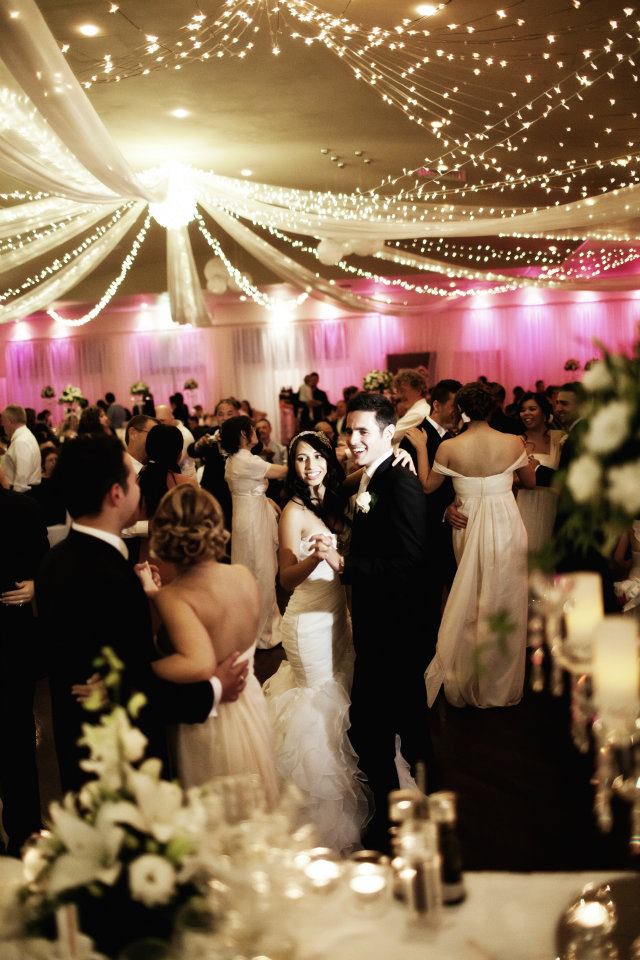
The couple share their first dance at the spectacular Sunrise ballroom of
Sfera's Park Suites & Convention Centre, Adelaide


Carla Waye is an acclaimed singer / songwriter and amazed her guests with a beutiful vocal performance with the help of David Fitzgerald. Carla sang a medley of songs including 'make you feel my love', 'angel of mine', 'heaven' and 'even when im sleeping'

As part of James' Greek Background, his family and friends pin money and lucky charms on him as a sign of good luck and fortune for the couples lives together.


Carla performs a traditional Filipino dance 'Tinkiling'. The two parralel bamboo poles are hit together and raised into the air and back to the ground to the rythmn of the music, as this is done Carla hops over and around the them in a skillful graceful manner.


We saved the most magnificent awe-inspiring photo till last.
As Carla and James embark upon their future together, we wish them a marriage filled with blissful and everlasting love, laughter and happiness.